


If you have walked along 2nd Street in Northern Liberties on a Friday night, you have felt how packed it gets. The bars and restaurants between Spring Garden and Girard pull thousands of people onto a narrow stretch of street, and most of them end the night looking for a ride home.
The street was never built for that kind of crowd. It was laid out in the mid-1800s, before cars existed, when the only traffic was foot, horses, and rail. Now the same street has to absorb late-night Ubers, transit riders walking up from the train, and drivers heading for the I-95 northbound on-ramp. The pedestrian accident count has been climbing because the corridor is being asked to do more than it was ever built to handle.
If you were hurt while walking on 2nd Street, you are not the first person to find themselves in this situation.
The Streets Were Never Built for Friday Night
Stand on 2nd Street near Poplar at midnight, and the geometry of the problem is right there in front of you. Two-way traffic. Parking on both curbs. Travel lanes are barely wide enough for one vehicle plus a cyclist. One double-parked Uber is enough to block the traffic through and force any rider behind it into the live lane.
By weekday afternoon, when only delivery trucks are around, this layout is fine. By 1:00 a.m. on a Friday, it cannot keep up. The bars draw thousands of people who all need a ride home at roughly the same time, and the street simply has no room for the staging.
What looks like normal Center City crowding has a specific cost. According to the City of Philadelphia, 12 percent of city streets account for 80 percent of all traffic deaths and serious injuries. The blocks where bars and pickup demand overlap are exactly the kind of streets that show up in that 12 percent. Pedestrians on 2nd Street are not unlucky in some abstract way. They are walking through a built environment that has been quietly stacking the odds against them.

What Goes Wrong After Bars Close on 2nd Street
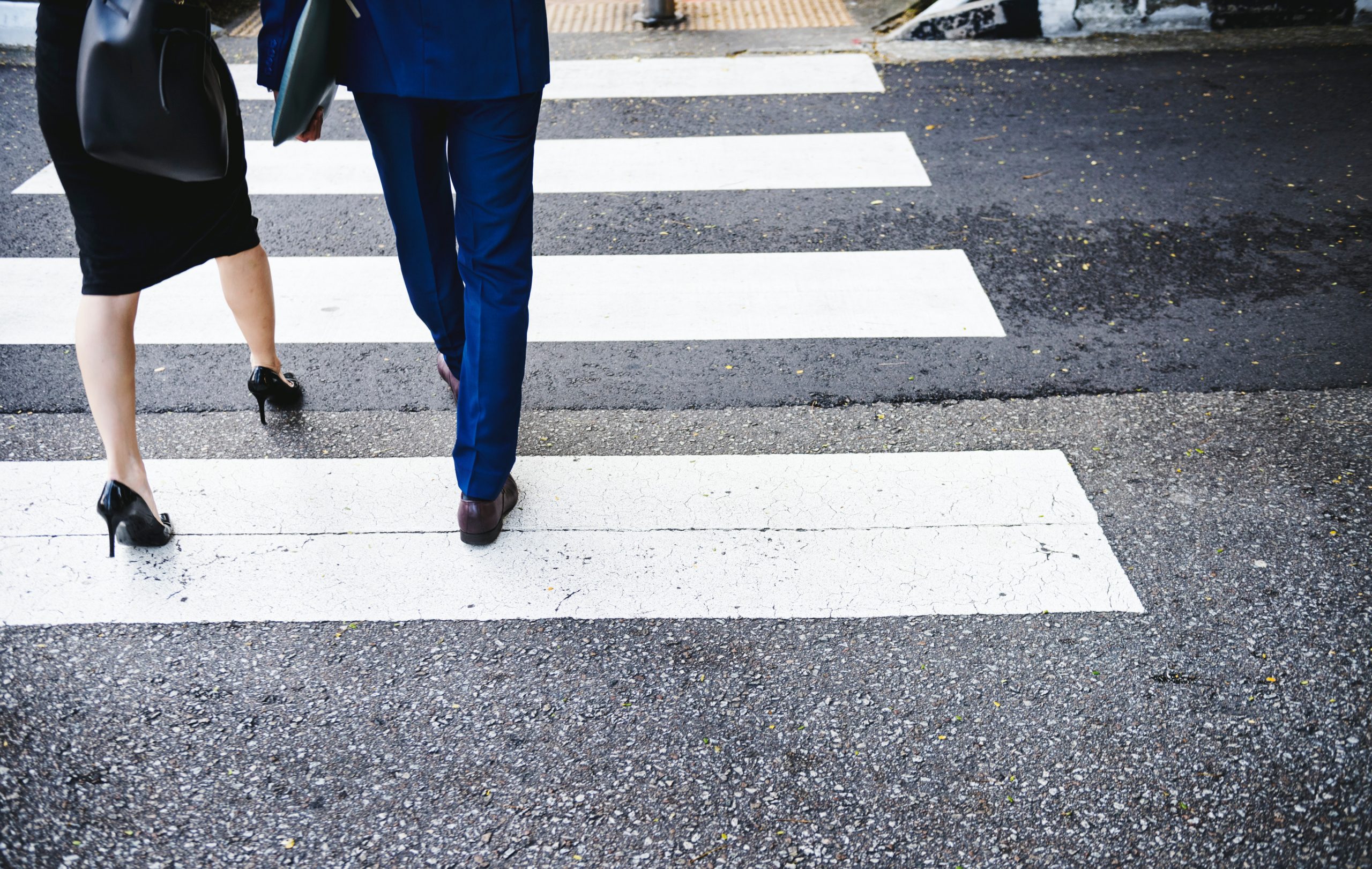
The crashes do not happen evenly through the night. They cluster between roughly 1:30 and 2:30 a.m., right at bar close, on the blocks between Poplar and Wildey. The pattern is consistent enough that the people who work this corridor every weekend can describe it from memory. People pour out of the bars, look for the Uber whose plate they were just texted, and spot it stopped two cars deep into the travel lane. They do not walk to the crosswalk. They cut between parked cars to reach the ride.
The Uber waiting in the lane blocks the next driver’s view of anyone stepping out from between cars. That next driver may have been drinking too. They notice the stopped Uber late, swing wide around it to keep moving, and never see the person crossing in front of them.
Spring Garden and Girard: The Two Worst Intersections
The strip has two ends, and each end has its own way of making things worse. The southern end at Spring Garden is where the corridor meets the I-95 northbound on-ramp. Drivers accelerating to merge onto the highway share a signal phase with bar-bound pedestrians coming up from the Spring Garden train station.
The Yards Brewing Company patio sits right there, putting outdoor diners within feet of merging traffic. If you have ever crossed Spring Garden at 2nd after a few drinks, you know how the ramp drivers do not always see you until late.
The northern end at Girard is the trolley problem. Girard Avenue is a wide PennDOT-controlled arterial with SEPTA’s Route 15 (now Route G) tracks running its full length. Trolley service came back in 2005 after years of bus replacement, and the tracks have been a known hazard for two-wheel riders ever since.
According to a DVRPC trolley crashes report, Routes 15, 10, and 36 carried more crashes than any of the other SEPTA trolley lines combined. Girard Avenue news coverage regularly reports the kind of incidents that follow: vehicle into trolley, motorcycle into rail, pedestrian crossing through a complicated multi-mode signal. At 2nd and Girard, three movement modes share one phase: cars, trolleys, and people on foot.

Why Pedestrians Pay the Price, and What That Means for Your Claim
When a car hits a person, the person loses. Walkers, cyclists, scooter riders, and motorcyclists are what city planners call vulnerable road users because they have no metal frame around them.
According to Vision Zero Philadelphia, in 2024, less than 10 percent of crashes in the city involved people on foot, on a bike, or on a motorcycle. Those same people made up nearly two-thirds of the year’s traffic fatalities.
The math lands directly on a corridor like 2nd Street, where every weekend night puts hundreds of pedestrians within feet of moving cars. The injuries you see in these cases—head trauma, broken pelvis, complex leg fractures, internal bleeding—are not minor. The recovery is rarely measured in weeks.
That severity is why these claims need a lawyer who knows the corridor and starts working on the evidence immediately. At Rand Spear – The Accident Lawyer, our Northern Liberties personal injury lawyers pull the police report, business camera footage from the bars and corner stores along 2nd Street, witness contact information, and rideshare app data showing pickup time and driver status.
Pennsylvania gives you two years from the date of the crash to file a personal injury lawsuit, long enough on paper, short enough in practice once camera footage starts overwriting and witnesses scatter. The earlier a lawyer gets involved, the more of the record stays preserved.

Pedestrian Crash FAQs in Northern Liberties, Philadelphia
- What Is the Time Limit for Suing SEPTA After a Pedestrian Crash on Girard Avenue?
Claims against SEPTA, PennDOT, or other Pennsylvania state agencies require a written notice of claim filed within 6 months of the incident, separate from the standard two-year personal injury statute of limitations. Missing the 6-month notice can bar a claim against the trolley operator or the roadway condition, even when the broader 2-year window is still open. This is why crashes that involve a SEPTA vehicle or a state-controlled road need a lawyer involved early.
- Who Carries the Insurance When a Rideshare Driver Hits Me on 2nd Street After I Leave a Bar?
Insurance often depends on whether the app is on. If they were logged in to the rideshare app on an active trip, the company’s $1 million third-party liability coverage applies. If the app is off, only the driver’s personal auto policy is in play.
- What Evidence Matters Most After a Pedestrian Crash on the Bar Strip?
The police report is the starting point, but the evidence that often makes the case is the stuff that disappears fastest: business camera footage from the bars and corner stores along 2nd Street, witness contact information from people who were on the block, and any rideshare app data showing pickup time and location. Cameras typically overwrite within days. The sooner a lawyer sends a preservation letter, the more of that record stays available for your case.
Talk to Our Northern Liberties, Philadelphia, Pedestrian Accident Lawyers at Rand Spear – The Accident Lawyer Today
If you were hit while walking on 2nd Street, Spring Garden, Girard, or anywhere in the Northern Liberties bar district, reach out to our Northern Liberties, Philadelphia, pedestrian accident lawyers at Rand Spear – The Accident Lawyer. Call 215-985-0138 or contact us online to schedule a free, no-obligation consultation. Located in Philadelphia, as well as Cherry Hill and Marlton, NJ, we assist clients throughout Pennsylvania and New Jersey.
Call or text (215) 985-2424 or complete a Free Case Evaluation form