


A slip and fall accident inside Reading Terminal Market can happen when a shopper encounters a hazard in a busy aisle. Water from a produce display, food dropped on the floor, or merchandise and equipment left in a walkway can create a dangerous condition. Under Pennsylvania law, businesses generally have a duty to maintain reasonably safe premises for customers. When a dangerous condition causes an injury, an injured shopper may be able to pursue damages for medical expenses, lost income, and pain and suffering.
At Rand Spear – The Accident Lawyer, our Reading Terminal Market slip and fall accident lawyers take on cases for people hurt inside stores and market halls. This building is not one store. Dozens of merchants rent space under a single roof, so the counter you stop at and the aisle you stand in are often maintained by different businesses.
Dozens of Independent Stalls Sit Under One Roof at Reading Terminal Market
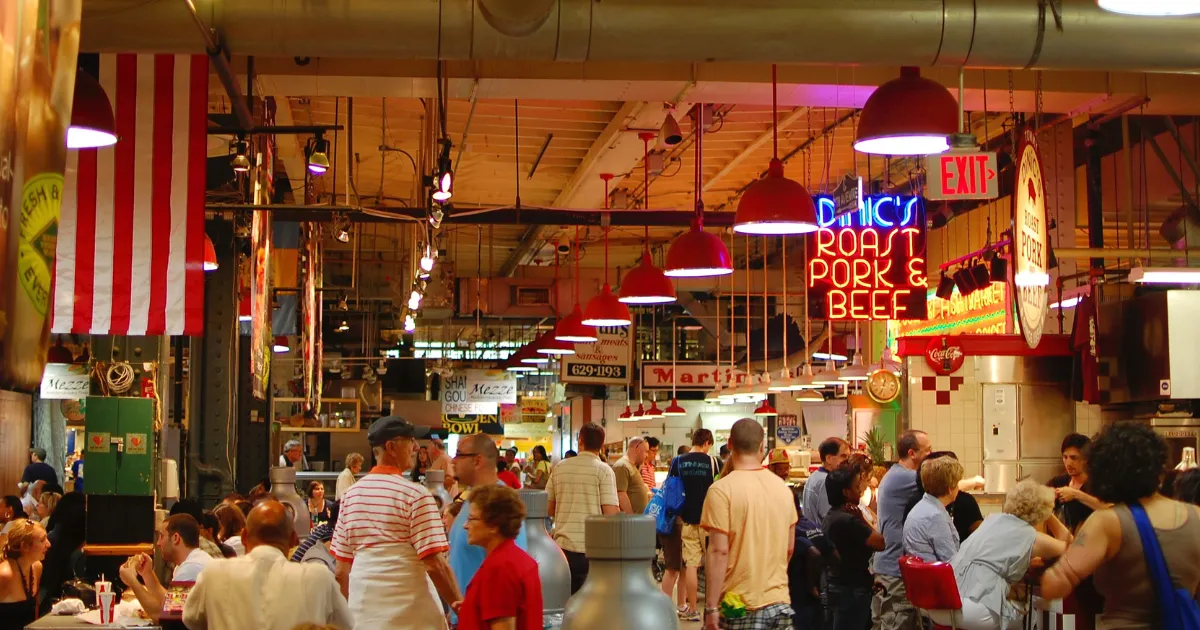
Walk in from the 12th Street doors at lunch, and the place reads like one large store. It is not. Roughly 75 to 80 independent merchants rent stalls here, and each handles its own counter and cleanup. The floor plan is old. The market opened in 1893 with 12 aisles and four avenues across about 78,000 square feet, and that grid still shapes how people move today. Since 1995, the hall has been run by the Reading Terminal Market Corporation, a nonprofit that handles daily operations.
That split matters after a fall, because the same business does not always maintain the stall front and the aisle floor.

Water Can Create Slip Hazards Near Market Stalls
Water on the floor can be particularly difficult to avoid in a busy market where fresh produce, beverages, and other goods are handled throughout the day. Produce vendors may mist displays to keep greens and other products fresh, allowing water to run onto the floor around the stall. Iovine Brothers Produce, for example, sells fresh produce from its Reading Terminal Market stand.
Moisture can also come from drinks, leaking containers, and wet footwear. A few drops may seem minor, but repeated foot traffic can spread water across a busy walkway. When moisture continues to collect near a stall or entrance, the condition can become more difficult for shoppers to see and avoid.
What Makes the Food Court Crowd Risky at Reading Terminal Market in Philadelphia?
The crowd itself. Lunch lines form in the open aisle instead of inside a shop, so people squeeze past customers who are standing still. Hot food moves through that crush all day. DiNic’s hands over roast pork sandwiches heavy with juice, and Miller’s Twist sells pretzels dipped in butter. Beiler’s Bakery provides glazed pastry that drops sugar and crumbs. Whatever lands near a counter gets carried several feet on the bottoms of shoes.
Shoppers carry full trays through the aisles to reach the seating area in the food court. They keep walking while they look for an open chair. A person balancing a tray may not be looking down.

How Do Delivery Carts Get Through the Aisles at Reading Terminal Market, Philadelphia?
Through the same aisles the shoppers use. The market fills its entire block and has no loading yard of its own. Stock comes in through the public doors while the hall is open. Hand trucks and rolling carts arrive with wet, gritty wheels off the street. Boxes get set down at a stall front during a delivery, and the aisle narrows. Restocking is heaviest in the morning, when merchants take in the day’s deliveries.
These aisles were laid out for people on foot rather than for freight. A shopper and a loaded cart often encounter each other late, and stepping back quickly on a wet floor is how many slip and falls start.

How Can Crowded Aisles Make Floor Hazards Harder to See?
In a crowded aisle, shoppers often see the person ahead of them rather than the floor beneath their feet. Reading Terminal Market’s compact layout can make that problem more pronounced, particularly when shoppers stop at a stall, move around a cart, or change direction suddenly.
A spill can remain hidden when foot traffic blocks the view of the floor. One shopper may stop at a counter while those behind move around them, leaving little room to choose a different path. A person stepping around a stopped cart or another shopper may have only a small area of floor available and may not see a wet or slippery spot before stepping into the hazard.
Crowds can also increase during the middle of the day, including when events at the nearby Pennsylvania Convention Center bring additional visitors into the area. First-time visitors may focus on locating vendors and reading signs, leaving less attention for hazards on the floor directly in their path.
How Can a Fall at Reading Terminal Market Affect an Injured Shopper?
A market floor is hard, and a fall onto it does real damage to an older shopper. Broken hips and wrists are common, and recovery runs for months. CDC figures put the medical cost of non-fatal falls among older adults at about $50 billion a year. Medicare covers roughly $29 billion of that, and fatal falls add another $754 million.
Our Reading Terminal Market slip and fall accident lawyers at Rand Spear – The Accident Lawyer represent shoppers hurt inside buildings such as this one. A broken wrist can mean surgery and weeks away from work, and the bills arrive well before a personal injury claim is finished.
Frequently Asked Questions About Falls Inside Reading Terminal Market in Philadelphia
- How Long Does a Market Hall Fall Claim Usually Take?
A market fall claim can take several months or longer, depending on the nature of the injury and whether the parties agree on what happened. Medical treatment often sets the pace because the full extent of an injury may not be clear until treatment is complete. Once the medical picture is clearer, the timeline may depend on whether the insurer accepts liability or disputes the claim.
- If I Fall at a Stall, Is the Merchant or the Market Responsible?
It can be either one, or sometimes both. Responsibility generally depends on who was responsible for maintaining the area where the accident occurred and who had a duty to address the dangerous condition.
- What Should I Do Before I Leave the Market After a Slip and Fall?
See a doctor the same day or as soon as possible, because a hip or wrist injury can feel manageable for an hour and then turn serious. Tell a worker what happened, ask for a written report, then take pictures of the floor. If someone stopped to help, ask for a name and a phone number.
Reach Out to Our Reading Terminal Market, Philadelphia Slip and Fall Accident Lawyers at Rand Spear – The Accident Lawyer
A fall at a lunch counter can mean surgery and weeks away from work, and no business volunteers to pay for the hazard it left on the floor. Rand Spear – The Accident Lawyer takes on claims against negligent merchants and operators. Our Reading Terminal Market, Philadelphia slip and fall accident lawyers work to find the responsible party. Call 215-985-0138 or contact us online to schedule a free consultation. Located in Philadelphia, as well as Cherry Hill and Marlton, NJ, we assist clients throughout Pennsylvania and New Jersey.
Add Rand Spear as a preferred source on Google – allowing you to see our updates faster and customize your Google feed.
Call or text (215) 985-2424 or complete a Free Case Evaluation form