


If you fell on a broken sidewalk outside a vacant lot or empty factory in Allegheny West, Philadelphia, the property’s private owner may be responsible. Philadelphia law requires owners to keep the sidewalk in front of their property reasonably safe. That duty continues while a building or lot stands empty. You may be able to file a slip and fall accident claim against the property owner.
At Rand Spear – The Accident Lawyer, our Allegheny West, Philadelphia slip and fall accident lawyers represent individuals injured outside vacant properties. This discussion explains the common hazards found on these sidewalks and why a property owner remains legally responsible even when a building is empty.
Vacant Lots and Empty Factory Buildings Remain Part of Allegheny West, Philadelphia
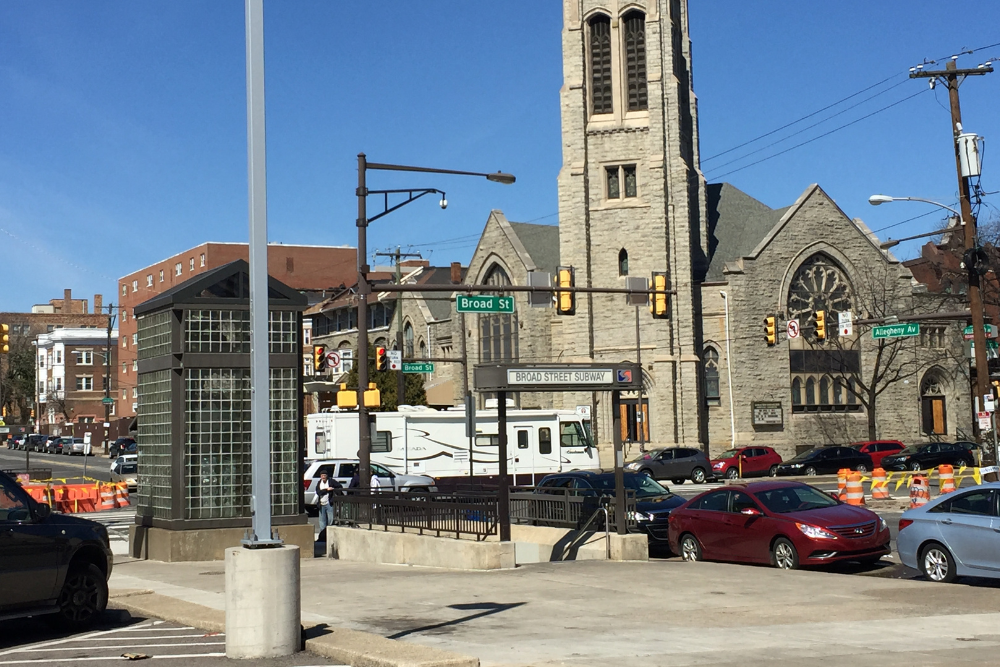
Vacant lots and empty industrial buildings are scattered among Allegheny West’s occupied rowhouse blocks. Most of those rowhouses date to the early 1900s, when factories were built along the main streets and rail lines. Worker housing filled the narrower streets between them.
The factory building at 2301-2313 West Allegheny Avenue went up in 1925 and is listed as vacant today.
Vacancy in the neighborhood is not new. A 2003 Philadelphia City Planning Commission plan found vacant houses and lots throughout Allegheny West. The heaviest concentration was in the southern blocks between 25th and 28th Streets. That plan also found no large vacant sites under a single owner.

Why Do Sidewalks Break Apart Outside Vacant Properties?
Sidewalks outside vacant properties often go unrepaired because no one on site is watching them. On occupied rowhouse blocks, residents pass their own sidewalks every day and can spot a new crack quickly. In front of an empty lot, the owner may be a company or someone who lives elsewhere. Damage there can spread for years before anyone fixes it.
As cracks widen, one slab can end up higher or lower than the next, leaving an uneven seam that can catch the toe of a shoe. Pieces of concrete can also break loose, leaving holes and chunks of rubble in the walking path.
A trip on broken concrete can cause severe injuries, such as broken wrists, hips, and ankles. CDC WISQARS data shows that even among Americans ages 55 to 64, unintentional falls led to an estimated 1,027,258 emergency department visits in 2022.
How Do Weeds and Overgrowth Hide Broken Pavement?
Weeds that grow through cracks and joints can hide broken edges and small holes until a foot catches. Walkers who are watching traffic instead of the pavement are most at risk. The roots can also push the gaps wider as the plants grow back each year.
Grass and brush from an overgrown lot can spill onto the sidewalk as well, narrowing the path. In autumn, fallen leaves and windblown trash can pile up on these sidewalks. There may be no one nearby to sweep them away. A wet layer of leaves can cover a broken slab while also making the surface slippery.

Why Is Dumped Debris on a Sidewalk So Dangerous?
Dumped debris can block the clear part of a sidewalk, forcing people to step around it onto broken pavement or into the street. Vacant lots can attract household trash, old furniture, tires, and leftover building materials. Smaller items, such as bottles, broken glass, and loose gravel, can roll or slide underfoot. The risk rises for people carrying bags or walking after dark.
Walkers who detour toward the street may find the curb broken or partly missing, leaving an uneven drop at the edge of the sidewalk. A misstep there can twist an ankle or throw someone forward into the path of passing vehicles.

Is an Owner Still Responsible for the Sidewalk When a Property Is Vacant?
Yes. Under Philadelphia law, the owner of a property must keep the sidewalk in front of it reasonably safe. The duty comes with owning the property, so it does not end when a building closes or a lot is cleared.
Public property records list the 1925 factory on West Allegheny Avenue as privately owned. A cleared lot at 2807 West Lehigh Avenue, along the neighborhood’s southern edge, has a private owner as well. If the sidewalk in front of properties such as these breaks apart or fills with debris, the owner is generally responsible for making it safe again.
Property owners are not required to maintain flawless sidewalks, but they must repair hazards that make walking dangerous. Under Pennsylvania premises liability law, an owner who fails to fix an unsafe sidewalk can be held responsible for resulting injuries. When sidewalk damage has been visible for months, it is difficult for an owner to claim they lacked time or opportunity to address it.
What Should You Do After a Fall Outside a Vacant Property in Allegheny West?
Get medical care right away, then document the sidewalk before anyone cleans it up or patches it. Photograph the broken spot from several angles, with a shoe or pen beside it to show its size. Include the nearest house number or building in at least one photo so that the property can be identified. Write down the time of day and whether the pavement was wet.
Ask anyone who saw you fall for a name and phone number. Keep the shoes you were wearing as well. At Rand Spear – The Accident Lawyer, our slip and fall accident lawyers search property records to find the owner. We also look for proof of how long the damage was there.
Frequently Asked Questions About Vacant Property Sidewalk Falls in Allegheny West, Philadelphia
- What Can You Recover After Getting Hurt on a Broken Sidewalk in Allegheny West?
You may seek compensation for medical expenses, lost wages, and pain and suffering. If a serious injury, such as a broken hip, prevents you from returning to work, your personal injury claim can also cover ongoing medical care and lost future earnings.
- Besides the Owner, Can a Contractor or Property Manager Be Liable for My Fall?
Yes. A demolition contractor, site-clearing company, or property manager may share liability if their actions or neglect created the unsafe condition. If the property is owned by a corporate entity, such as an LLC, the legal claim is filed directly against that business.
- Who Pays for Your Treatment While a Sidewalk Fall Claim Is Pending?
Your personal health insurance, Medicare, or Medicaid typically covers medical care while your claim is pending. If your case is successful through a settlement or court verdict, the property owner’s liability insurer will pay compensation, which can reimburse your medical costs.
Did a Broken Sidewalk Cause Your Fall? Call Our Allegheny West, Philadelphia Slip and Fall Accident Lawyers at Rand Spear – The Accident Lawyer
If a broken or debris-covered sidewalk outside a vacant property left you injured, reach out to our Allegheny West, Philadelphia slip and fall accident lawyers at Rand Spear – The Accident Lawyer. Call 215-985-0138 or contact us online to schedule a free, no-obligation consultation. Located in Philadelphia, as well as Cherry Hill and Marlton, NJ, we assist clients throughout Pennsylvania and New Jersey.
Add Rand Spear as a preferred source on Google – allowing you to see our updates faster and customize your Google feed.
Call or text (215) 985-2424 or complete a Free Case Evaluation form