

Comparative negligence is one of the most important concepts to understand if you have been hurt in Philadelphia and are considering a personal injury claim. It comes into play whenever more than one person or entity may share responsibility for what happened. In many real-life accidents, fault is not perfectly one-sided. A driver might be speeding, but the other driver might have been distracted. A property owner might have failed to clean up a spill, but a visitor might have been looking at their phone. Comparative negligence is the legal framework Pennsylvania uses to sort out those shared-fault situations.
Why does this matter? Because the percentage of fault assigned to you can directly reduce the money you may recover. And if your share of fault is high enough, it can bar recovery entirely. That means the same set of injuries and bills can lead to very different outcomes depending on how the facts are presented, what evidence is available, and how an insurance adjuster, judge, or jury views each person’s choices.
This article explains what comparative negligence means under Pennsylvania law, how fault percentages change compensation, what evidence tends to drive fault disputes, and practical questions people in Philadelphia commonly ask after an accident.
What Comparative Negligence Means Under Pennsylvania Law
Pennsylvania follows a modified comparative negligence rule. In plain terms, the law allows an injured person to recover damages even if they were partly at fault, but only up to a point. If you are found to be more at fault than the party you are seeking damages from, you cannot recover. If you are found to be equally or less at fault, you can recover, but your compensation is reduced by your percentage of fault.
This rule applies across many personal injury scenarios in Philadelphia, including vehicle accidents, slip and fall injuries, pedestrian collisions, and other negligence-based claims. The underlying idea is that responsibility should be allocated in proportion to conduct. Someone who is 10 percent responsible should not be treated the same as someone who is 90 percent responsible, even if both played some role.
Comparative negligence is not just about blame in a moral sense. It is a legal assessment of whether a person failed to use reasonable care under the circumstances, and whether that failure contributed to causing the injury. In a car crash, that might involve questions like speed, following distance, lane changes, or attention to traffic signals. In a premises case, it might involve whether a hazard was present long enough that it should have been discovered, and whether the injured person acted reasonably in watching where they were walking.
Importantly, fault allocation is often contested. Insurance companies may push to assign a higher percentage of fault to the injured person to reduce what they have to pay. Defendants may argue the injury was caused mainly by the plaintiff’s choices, not the unsafe condition or negligent act. Because of that, understanding how comparative negligence works is not only a legal technicality. It shapes strategy, evidence gathering, and the realistic value of a claim.

How Fault Percentages Affect Compensation in Pennsylvania Personal Injury Claims
Under Pennsylvania’s modified comparative negligence framework, your compensation is reduced by your assigned percentage of fault. If your total damages are calculated at a certain amount, the reduction happens after the damages are determined. For example, if a jury finds you suffered $100,000 in damages but assigns you 20 percent fault, the award is reduced by 20 percent, resulting in $80,000. If your fault is 50 percent, you can still recover, but the award is cut in half. If your fault is 51 percent or more, you recover nothing.
This becomes especially significant in claims involving medical expenses, lost income, and long-term effects. In Philadelphia personal injury cases, damages often include current medical bills, anticipated future treatment, rehabilitation, lost wages, loss of earning capacity, and non-economic damages such as pain and suffering. Comparative negligence reduces the combined total. A relatively modest shift in fault percentage can therefore change the outcome dramatically, particularly in cases with serious injuries.
Fault allocation also affects settlement negotiations. Many cases resolve without trial, and insurance carriers frequently evaluate claims through the lens of “risk of comparative negligence.” If the insurer believes it could persuade a jury that you were 40 percent at fault, it may offer less, even if you believe you did nothing wrong. Conversely, strong evidence minimizing your fault can increase bargaining power because it raises the potential verdict value and reduces the insurer’s argument for a discount.
It is also important to understand that fault can be spread among multiple parties. In a multi-vehicle collision, different drivers may each carry a percentage. In a fall at a business, responsibility could involve a property owner, a maintenance contractor, and another customer who created the hazard. Your own fault, if any, is assessed alongside theirs.
In practice, comparative negligence often turns on details that seem small at first. In a vehicle accident, a few seconds of distracted driving can shift fault. In a slip and fall, whether you had a clear line of sight to a hazard and what lighting conditions were like can matter. Because the percentages determine whether you recover and how much, the focus is usually on reconstructing the event as precisely as possible and connecting the evidence to reasonable-care standards.
Evidence and Common Disputes in Allocating Fault
Fault allocation is evidence-driven. The same incident can be interpreted in different ways depending on what proof exists and how credible it is. In Philadelphia personal injury cases, disputes commonly arise over what happened immediately before the injury, whether the injured person had an opportunity to avoid the harm, and whether the defendant’s conduct was the primary cause.
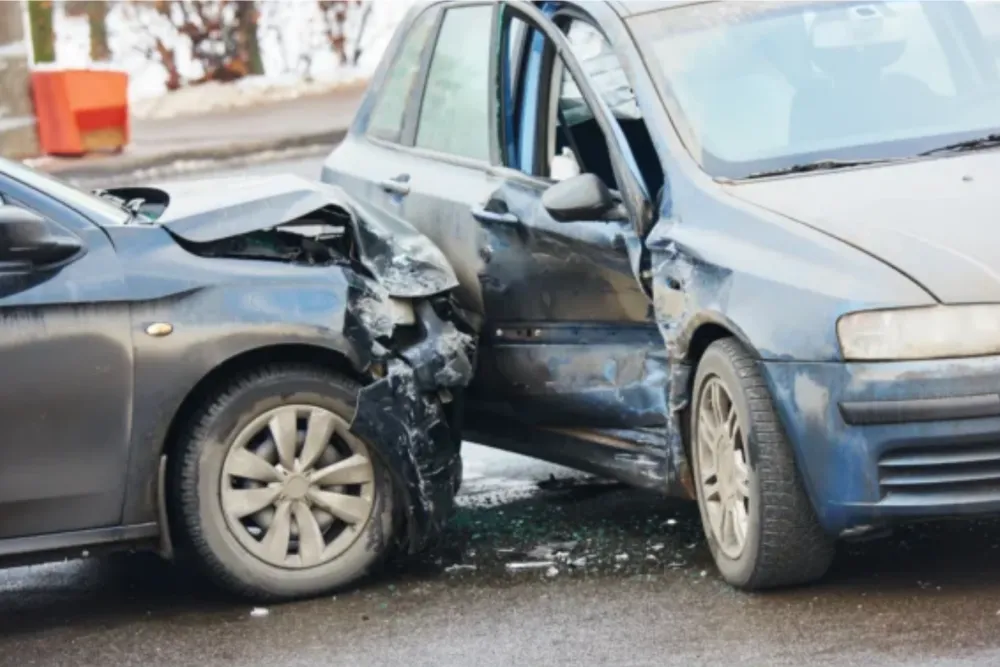
In vehicle accidents, key evidence often includes police reports, photographs of vehicle damage, surveillance footage from nearby businesses, dashcam video, event data recorders, and witness statements. Medical records can also matter, not only for injuries, but for timing. A dispute may arise if the defense argues the injuries did not occur the way the plaintiff describes, or that they stem from a different incident. Another recurring dispute is whether a driver had the right of way and whether any violation was a substantial factor in causing the crash. Insurance companies may argue a plaintiff failed to brake in time, was driving too fast for conditions, or changed lanes unsafely. Plaintiffs may argue the other driver’s inattention, speeding, or failure to yield set the collision in motion.
In slip and fall cases, disputes frequently center on notice and “open and obvious” arguments. A business may contend the hazard was obvious and that a reasonable person would have avoided it. The injured person may counter that the hazard blended into the floor, was obscured, or appeared unexpectedly due to poor lighting, clutter, or a crowded aisle. Evidence that helps includes incident reports, cleaning logs, maintenance records, photographs of the area, and statements from employees or other patrons. Timing is often critical. If the defense claims the spill happened moments earlier, it may argue there was no reasonable opportunity to fix it. If evidence suggests it existed for a longer period, fault can shift toward the property owner.
Across all case types, credibility is a common battleground. Inconsistent statements, social media posts, or gaps in medical treatment can be used to argue that the plaintiff is exaggerating or that their conduct caused the injury. On the other hand, prompt medical evaluation, consistent reporting of symptoms, and documented limitations can support both damages and the overall narrative of responsibility.
Because comparative negligence is about reasonableness, context matters. Weather, lighting, traffic flow, visibility, signage, and the presence or absence of warnings can all influence percentages. In many claims, the decisive evidence is not a single “smoking gun,” but a combination of records, images, expert opinions, and testimony that either supports or undermines the argument that each party acted with reasonable care.

FAQs
How is fault determined in a Philadelphia personal injury case?
Fault is determined by evaluating whether each party acted reasonably under the circumstances and whether any unreasonable conduct contributed to the injury. In practice, fault can be assessed at different stages. An insurance adjuster may assign fault during the claim review, often based on statements, police documentation, photos, and medical records. If a lawsuit is filed, fault can be argued through discovery, depositions, and expert analysis such as accident reconstruction or premises safety opinions. Ultimately, if the case goes to trial, a judge or jury may assign fault percentages after hearing evidence and instructions on the law. Because different fact-finders can view the same situation differently, strong documentation and consistent accounts of what happened can heavily influence the final fault allocation.
If I am partly at fault, can I still recover compensation?
Yes, in Pennsylvania you can still recover compensation if you are partly at fault, as long as your share of fault is not greater than the defendant’s. Your recovery is reduced by your percentage of fault. For example, if you are found 25 percent responsible, your damages award is reduced by 25 percent. The critical threshold is whether your fault is 50 percent or less. At 50 percent, you may still recover, but your compensation is cut in half. If you are found 51 percent or more at fault, you cannot recover damages. This is why disputes about seemingly minor details can matter. Shifting fault by even a small amount can change whether recovery is possible and how much is ultimately available.
What kinds of evidence help reduce allegations that I was negligent?
Evidence that shows you acted reasonably and that the other party’s conduct or an unsafe condition was the primary cause tends to reduce allegations of negligence. In vehicle cases, helpful proof often includes clear photographs of the scene, dashcam or surveillance video, witness contact information, and documentation of traffic signals or signage. In slip and fall matters, photos of the hazard, the surrounding area, lighting conditions, and any lack of warnings can be important, along with records like cleaning logs or incident reports when available. Medical records also matter because prompt treatment can support that the injuries are real and connected to the incident. Consistency is a major theme. When statements, records, and physical evidence align, it becomes harder for an insurer or defendant to argue that your actions were the main cause of what happened.
What if the other side says the hazard was “open and obvious” in a slip and fall?
The “open and obvious” argument is commonly used to claim a person should have seen and avoided a hazard, which can increase the percentage of fault assigned to the injured person. Whether a condition is truly open and obvious depends on context. A spill that is clear, blending into the floor, may not be obvious. Poor lighting, crowded walkways, distracting displays, or an obstructed view can also affect what a reasonable person would notice. Courts and juries may consider whether the property owner should have anticipated that people would be exposed to the hazard despite its visibility, especially in busy commercial spaces where attention is naturally divided. Evidence like photographs from the same angle and lighting, surveillance footage, and witness observations can be decisive in challenging the claim that the danger was obvious.
Does comparative negligence apply in wrongful death claims?
Comparative negligence can apply in wrongful death claims because the underlying event is still evaluated under negligence principles, including whether the decedent contributed to the incident. If the defense argues the decedent’s actions were a substantial factor in causing the fatal event, a fault percentage may be assigned and can reduce or bar recovery under the same modified comparative negligence rule. This can be a sensitive and highly contested issue, particularly where the decedent cannot provide their own account. As a result, objective evidence often carries extra weight, including scene documentation, witness statements, video footage, vehicle data, and expert reconstruction. The goal is typically to provide the clearest possible explanation of how the incident occurred and why the primary responsibility rests with the defendant.

Conclusion
Comparative negligence shapes nearly every disputed personal injury claim in Philadelphia because it controls how responsibility is shared and how compensation is calculated. Pennsylvania’s modified approach allows recovery when an injured person is partly at fault, but reduces damages by the assigned percentage and blocks recovery if the injured person is found more at fault than the defendant. That makes fault percentages more than just an abstract legal concept. They directly affect whether a claim is viable, what it may be worth, and how an insurer evaluates settlement.
Because fault allocation is evidence-driven, the outcome often turns on practical details: photos from the scene, witness accounts, surveillance video, medical documentation, and records that show what each party knew and did. Disputes are common in vehicle crashes over right of way, speed, and attentiveness. They are common in slip and fall cases over notice, maintenance practices, and whether a hazard was truly avoidable. The strongest cases typically present a consistent narrative backed by objective proof.
If you are dealing with questions about shared fault after an injury, it can help to get reliable legal information tailored to your situation. For more educational resources and guidance on next steps, you can visit https://randspear.com/.
Call or text (215) 985-2424 or complete a Free Case Evaluation form