


Millville, New Jersey’s museums, galleries, and theaters each put visitors on a different kind of floor, and keeping those surfaces safe is the operator’s job. New Jersey law puts that responsibility on the group that runs the place, not on the visitor. The duty covers the walkway, the lobby, the stairs, and the restroom. Therefore, a venue that leaves a known hazard in place can end up paying for the slip and fall accident that follows.
At Rand Spear – The Accident Lawyer, our Millville slip and fall accident lawyers handle personal injury claims for people hurt inside public buildings. The city’s cultural venues run from a 45-acre arts campus to a theater more than a century old. Each type of building fails visitors in its own way. We know how to show what an operator should have caught.
Millville’s Cultural Attractions Sit in Very Different Kinds of Buildings
Walk North High Street on a show night, and the sidewalk fills. Drive out to the arts campus on a Saturday afternoon, and the scene looks nothing alike.
WheatonArts spreads 18 buildings across a 45-acre campus at 1501 Glasstown Road. A glass museum sits at the center of it, a nod to the industry that built this city. Downtown, the Glasstown Arts District packs galleries into roughly six blocks of century-old brick storefronts.
Two settings, one shared problem. Neither was designed around the way crowds move through a public building today. The storefronts went up for shops back when the glass factories were running. A campus grows building by building, and the paths between them grow the same way.

Why Do Museum Campus Walkways in Millville Create Fall Risks?
Because a campus asks visitors to walk outdoors between separate buildings. Every stretch of that route is a different surface from a different decade.
Paths on a large site get added as buildings get added. A brick walk meets a poured pad, and the pad meets packed gravel. Each seam is a small rise or drop that nobody announces.
Tree roots lift pavers over time, and grass creeps across path edges. Summer rain collects in the low spots. A visitor reading a sign or watching a demonstration is not watching the ground.
Then comes the doorway, where an older building often has a raised sill, and the light changes the moment a visitor steps through.
Why Is a Historic Millville Theater Harder to Walk Than It Looks?
Because the house lights drop, and the floor a visitor walked in on stops being visible. Sloped aisles and short runs of steps do not announce themselves in the dark.
Theaters of that era share a shape. Aisles pitch downhill toward the stage, so a foot lands lower than expected. Steps arrive in ones and twos instead of full flights, the pattern people misjudge most. Patterned carpet hides the edge of a tread.
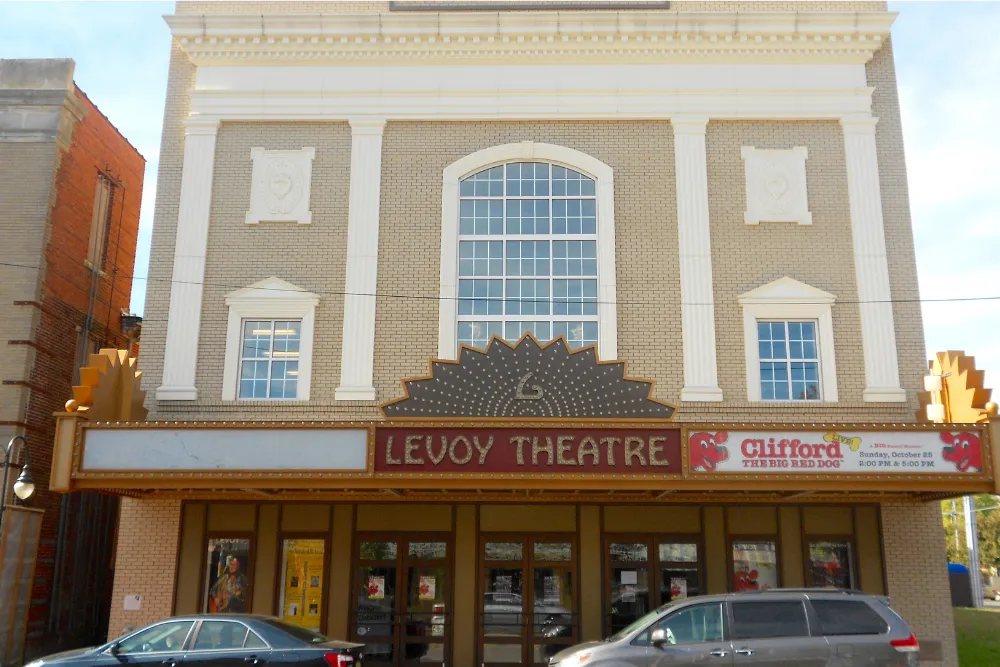
Millville has a theater of that vintage on the 100 block of North High Street. A nonprofit group runs the Levoy Theatre, which has stood there since the early 1900s and reopened after a 2012 renovation.
At intermission, the whole house stands up at once, drinks in hand, with nobody looking down.

How Do Gallery Floors in Millville Put Visitors Off Balance?
A gallery is built to pull eyes up to the walls. Whatever sits on the floor becomes a surprise.
The Riverfront Renaissance Center for the Arts runs two exhibit galleries at 22 North High Street, and admission is free. Nearby studio buildings hold working artists on the same historic blocks.
Downtown galleries occupy storefronts that changed hands many times. Each tenant patched or covered the floor a different way, so one room can sit a step below the next. Wood floors get polished for an opening, and a polished board grips a shoe differently than a worn one.
Then add show equipment. Pedestals sit at ankle height, light stands need cords, and a crowd hides all of it.

Why Are Public Restrooms a Real Fall Risk at Millville Venues?
Because a restroom is the one room where a visitor leans on fixtures instead of walking. Water, tight space, and a grab for support stack up fast.
CPSC data counts about 88,780 emergency room visits a year among adults 65 and older for falls involving toilets. That is roughly 7.4 times the rate for younger adults.
Restrooms in old public buildings were usually carved out later, into whatever space was left over. Stalls end up narrow, and tile turns slick with a little water. Sinks and hand dryers drip onto the floor between them.
Matinees and daytime programs draw exactly that audience. At Rand Spear – The Accident Lawyer, our Millville slip and fall accident lawyers know a restroom fall is the one nobody photographs in time.
Who Is Responsible for a Fall Inside a Millville Museum or Theater?
The operator that invited visitors in, and sometimes the building owner as well. Responsibility turns on what they knew about the hazard, or should have known.
Lawyers call this premises liability, which means a venue has to keep the place in reasonably safe condition for the people allowed on it. New Jersey treats a ticketed patron or a gallery visitor as a business invitee. That term means the venue opened its doors hoping people would come, and it carries the highest level of care state law requires.
Therefore, the case usually comes down to notice. If staff knew a mat was curled, or walked past it every day for a week, responsibility follows. A venue also has to go looking for hazards instead of waiting to be told.
Many downtown spaces are rented, so an operator and a landlord can both share the blame.
Frequently Asked Questions About Museum and Gallery Falls in Millville
- Do I Have a Case After a Fall at a Millville Attraction?
Two things decide it: an injury that needed treatment, and something wrong with the ground where you went down. A stumble you walk off is not a claim, and neither is a fall you caused on your own. A free call with a lawyer sorts the strong claims from the thin ones.
- Which Insurance Covers a Fall at a Millville Museum?
The venue’s liability insurance usually pays the medical bills, lost wages, and pain and suffering, not the museum’s own budget. Some venues also carry medical-payments coverage, which picks up a visitor’s first bills no matter who was at fault. Either way, the offer comes from an adjuster, not from the staff who run the building.
- Can I Still Recover if I Was Watching an Exhibit Instead of the Floor?
Usually yes. New Jersey follows modified comparative negligence, which lets an injured visitor recover as long as they were not more than half responsible. A share of the blame reduces the money rather than ending the claim.
If You Slipped and Fell, Reach Out to Our Millville Slip and Fall Accident Lawyers at Rand Spear – The Accident Lawyer
A fall at a museum, a gallery, or a theater in Millville deserves a hard look at who let the hazard sit. Rand Spear – The Accident Lawyer can review the building, the maintenance record, and the injury. Our Millville slip and fall accident lawyers hold negligent property owners accountable for a hazard left in place. Call 215-985-0138 or contact us online to schedule a free, no-obligation consultation. Located in Philadelphia, as well as Cherry Hill and Marlton, NJ, we assist clients throughout Pennsylvania and New Jersey.
Add Rand Spear as a preferred source on Google – allowing you to see our updates faster and customize your Google feed.
Call or text (215) 985-2424 or complete a Free Case Evaluation form