


Walk Christian Street between 15th and 20th, and the sidewalk changes every 20 feet. Old slabs sit next to fresh pours at new condos. Brick paving lifts where street trees have grown for a century. The strip known as Black Doctors Row sits inside a historic district, which shapes what owners can do when a slab cracks.
At Rand Spear – The Accident Lawyer, our Graduate Hospital slip and fall accident lawyers handle sidewalk-injury claims on this corridor. We help residents and visitors hurt while walking from a parked car to a row home or from a SEPTA stop to a corner store.
The Sidewalk Conditions on Christian Street in Graduate Hospital, Philadelphia
Christian Street between 15th and 20th runs through a residential historic district inside Southwest Center City. The fronts read as one long row of brick, but the walking surface is not uniform.
Old concrete slabs make up most of the corridor. Many were poured before modern joint standards. They have soaked up decades of freeze-thaw cycles. Since 2000, new condo work has dropped, with fresh pours next to slabs not touched in 50 years.
Tree-root heave shows up on nearly every block. Street trees planted a century ago push slabs up at the joints, sometimes leaving a lip of one to two inches.
Curb-cut quality changes block by block. Some parcels install an ADA-compliant ramp. The frontage next door may keep a stepped curb. A walker stepping from one to the other can lose footing.

What Causes the Trip Hazards on These Christian Street Sidewalks in Graduate Hospital, Philadelphia
The most common defect on Christian Street is the lifted slab edge. Tree roots find water and air at the gap between slabs, and they expand season after season. One slab pushes up, while its neighbor stays put. Many cities treat a lip of half an inch as a tripping hazard. On these blocks, lips of one to two inches are common.
Older concrete wears down from the top. The top layer flakes off and exposes the stone aggregate, and the edges chip and crumble. Walkers do not see the trip line until their foot finds it.
Freeze-thaw cycling deepens cracks every winter. Water enters a hairline crack, freezes, and expands. By spring, the slab sits lower than its neighbor.
Brick paving lifts one brick at a time rather than in slabs, and a single high brick can catch a toe. According to the CDC, one in four older adults reports a fall each year. The age-adjusted death rate climbed from 64.7 per 100,000 in 2018 to 78.4 per 100,000 in 2024, a 21% jump.
How Philadelphia Law and Historic-District Preservation Rules Interact in Graduate Hospital, Philadelphia
Philadelphia law puts the duty on the owner of the property along the sidewalk. The owner must keep the sidewalk in safe repair, remove snow and ice within a reasonable time, and replace defective slabs.
A premises liability claim is the legal rule that holds property owners responsible for unsafe conditions. It asks whether the owner had actual notice (they knew about it) or constructive notice (they should have known about it). A slab lifted an inch for two winters is a condition any reasonable resident would have seen.
The complication is the historic rules, an extra layer of city rules that limit what an owner can change on a historic block. According to SOSNA Historic Preservation, the South of South Neighborhood Association partnered with the Preservation Alliance to nominate the district for the designation. Replacement concrete must match the original color and finish, and brick sections must be laid using bricks that match the historic period. Curb cuts face review at a historic frontage.
The duty pushes for fast repair to a modern standard. The historic rules advocate for slow repair with approved materials. Some owners defer repair entirely, but deferred repair is not a defense. The review process affects how an owner repairs the sidewalk, but it does not lift the duty to keep the walkway reasonably safe. At a city-owned parcel or a SEPTA facility, the public entity is the responsible party under a separate notice rule.

What an Injured Walker Should Know About a Christian Street Sidewalk Claim in Graduate Hospital, Philadelphia
Pennsylvania gives an injured person two years from the date of the fall to file a personal injury lawsuit. This deadline is called the statute of limitations. After it passes, the claim is barred. The deadline is shorter when a government entity is the responsible party. If the City of Philadelphia, SEPTA, or PennDOT is involved, a separate written notice must be filed within six months. A fall in front of a SEPTA stop or a city-owned facility can trigger that rule.
A sidewalk slip and fall is usually evaluated under premises liability. A claim asks whether the owner knew or should have known about the defect, and whether the failure to fix it caused the injury. The age of the defect is often a strength, because a slab raised an inch for years is a condition the owner knew about.
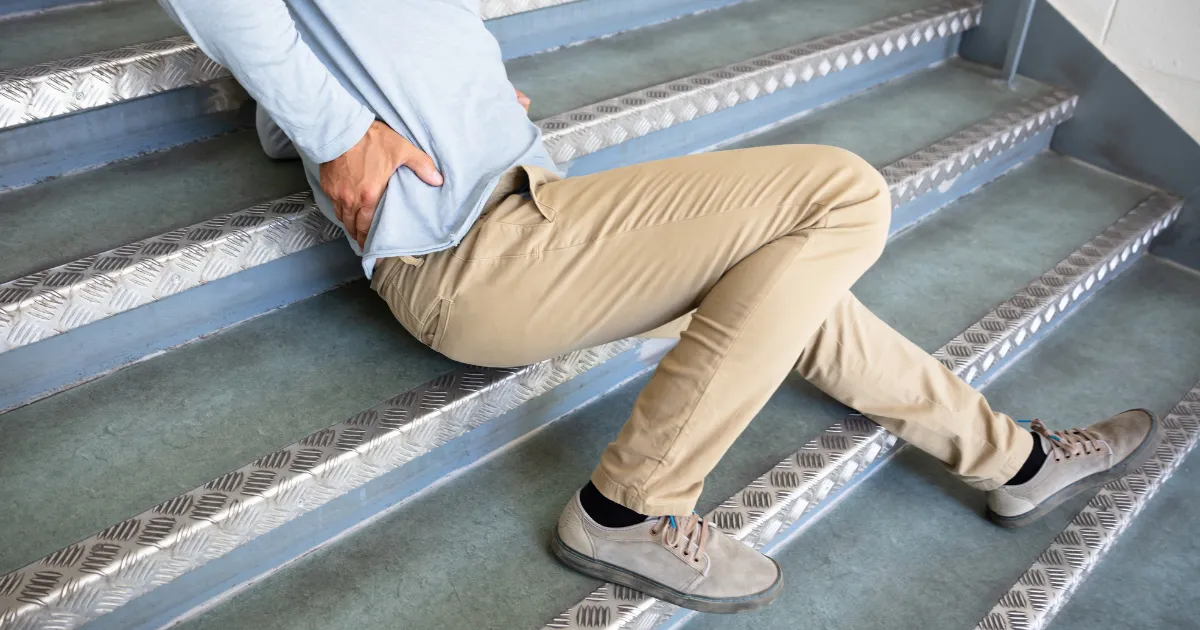
Evidence preservation matters from day one. Photograph the defect from several angles, place a coin beside the lip for scale, note the address, and save the shoes worn at the fall. The owner may argue that historic rules prevented repair. Photograph the surrounding historic features in the same frames so that the comparison stays on the record. Get witness names from neighbors who recall how long the defect has existed, and seek medical care promptly.

Frequently Asked Questions About Christian Street Sidewalk Falls in Graduate Hospital, Philadelphia
- How Long Do I Have to File a Sidewalk Slip and Fall Claim in Graduate Hospital, Philadelphia?
Pennsylvania’s general statute of limitations gives you two years from the date of the fall to file a personal injury lawsuit. A government entity such as the City of Philadelphia, SEPTA, or PennDOT may be responsible. In that case, a separate written notice must be filed within six months of the injury. Speaking with a lawyer early protects both deadlines.
- Who Is Responsible for Keeping the Sidewalk in Front of a Christian Street Property in Good Repair?
Under Philadelphia Code §11-201, the owner of the property along the sidewalk is responsible for sidewalk repair and snow and ice removal. When the sidewalk is in front of a city-owned facility or a SEPTA stop, the public entity may be the responsible party. The six-month government-entity notice rule applies.
- Does Historic-District Status Limit a Property Owner’s Duty to Fix a Dangerous Sidewalk on Christian Street?
No. The review process can affect what materials an owner uses to repair the sidewalk. It does not lift the duty to keep the walkway reasonably safe. An owner who leaves a known hazard in place for years can still be held liable for an injury that results.
Hurt in a Slip and Fall? Talk to Our Graduate Hospital, Philadelphia Slip and Fall Accident Lawyers at Rand Spear – The Accident Lawyer Today
Were you hurt in a sidewalk fall on Christian Street or anywhere in Graduate Hospital, Philadelphia? Our Graduate Hospital, Philadelphia slip and fall accident lawyers at Rand Spear – The Accident Lawyer are ready to help. Call 215-985-0138 or fill out our online form to schedule a free, no-obligation consultation. Located in Philadelphia, as well as Cherry Hill and Marlton, NJ, we assist clients throughout Pennsylvania
Call or text (215) 985-2424 or complete a Free Case Evaluation form